Outbound AI Appointment Setter: What It Does and Why Voice Changes Everything

Key Takeaways
- An outbound AI appointment setter is not a general AI SDR. It focuses on one job: proactive calling, live qualification, and calendar booking. No human in the loop until intent is confirmed.
- Most outbound AI tools run on email sequencing. Voice-first setters reach prospects in real time, handle objections live, and generate feedback loops in hours instead of days.
- 94% of sales leaders say AI agents are essential to growth (Salesforce State of Sales 2026), but adoption is still front-loaded toward inbound use cases. Outbound voice is the gap.
- The AI-to-human handoff is where the system earns its ROI. AI handles 80%+ of dials; human SDRs close when the opportunity is real and the prospect is ready.
- For equipment dealers, voice-first outbound covers three high-value motions: cold outreach to MQLs, missed-quote re-engagement, and abandoned-cart follow-up.
Outbound sales has a volume problem. A human SDR completes 30 to 60 dials on a good day. Most prospects do not answer. The ones who do answer need to be qualified, objection-handled, and convinced to put time on a calendar, all inside a cold call they were not expecting.
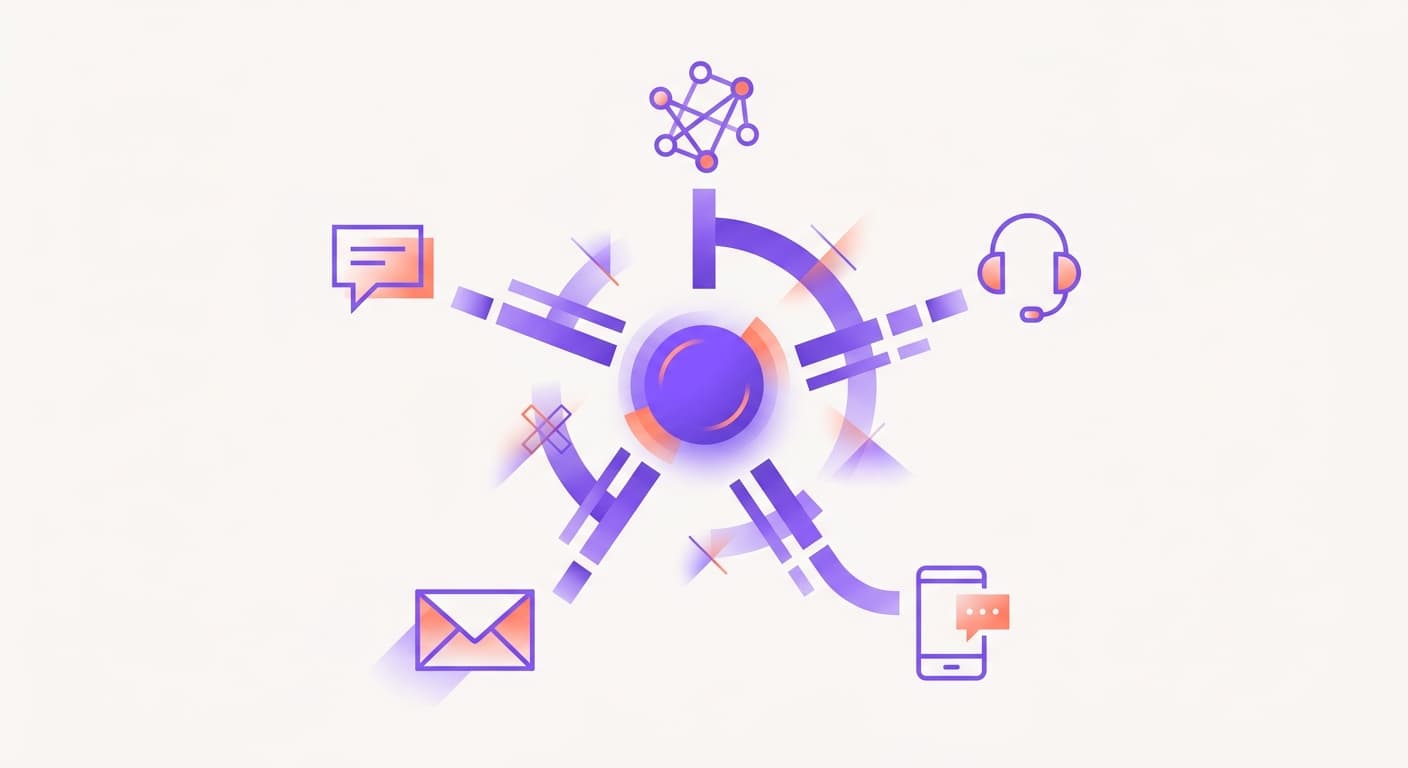
An outbound AI appointment setter is built to absorb that volume. It dials from a list, runs a live qualification conversation, and books the meeting. It does this across hundreds of prospects in the time a human team handles dozens. And it does it consistently, without burnout, without script drift, and without missing the follow-up.
The important distinction: most outbound AI tools do this over email. The ones that do it over voice are in a different category entirely.
What an Outbound AI Appointment Setter Actually Does
The term "AI SDR" covers a wide range of software. Email sequencers with some AI copy. Fully autonomous agents that manage an entire prospecting function. An outbound AI appointment setter is more precise than that.
Its scope is:
- Dial outbound from a defined list. Not reactive to inbound leads. Proactively reaching prospects who have not yet raised their hand.
- Qualify on live intent. Ask budget, timeline, and need questions during the call. Detect buying signals in real time. Adapt the conversation based on answers.
- Handle objections. "We already have a vendor" and "call me next quarter" are expected. The AI handles these with context, not canned deflections.
- Propose and book a meeting. Check calendar availability, offer a time, confirm the booking, and log the interaction to the CRM without human input.
What it is not: a general-purpose AI that writes prospecting emails, scores pipeline health, or generates quarterly forecasts. Those are AI SDR features. The appointment setter strips everything down to the core conversion event: a human being agreeing to meet.
Salesforce's State of Sales report found that 94% of sales leaders say AI agents are essential to growth, yet most teams are still deploying AI on inbound and pipeline-management tasks. Outbound voice is underdeveloped. That gap is where early adopters are building a durable advantage.
How the core workflow runs
- The system imports a list: MQLs from a paid ad campaign, contacts from a trade show, expired quote recipients, or a target-account list from the CRM.
- The AI dials during configurable calling windows (business hours, excluding known DNC contacts).
- The conversation opens with a short, context-specific intro: who the AI is calling from, why it is relevant to this prospect, and a question designed to open dialogue.
- If the prospect engages, the AI qualifies. If they decline, it asks for a callback preference or leaves a structured voicemail.
- Interested prospects get a meeting booked on the calendar. The AI confirms the time, sends a calendar invite, and logs the call notes to the CRM.
- Calls where the prospect requests a human are transferred live with full context.
The entire loop runs without SDR involvement until there is a reason to involve one.

Why Voice Is the Competitive Moat
Every major outbound AI platform names this category. Regie.ai, 11x.ai, AiSDR, Conversica: all position on AI-driven prospecting. The meaningful difference is not the AI. It is the channel.
The majority of outbound AI platforms lead with email sequencing. They generate personalized cold emails, manage multi-step cadences, and use AI to improve open and reply rates. These are real improvements over manual prospecting. But email has structural limits:
- Latency. Cold email sequences take days to weeks to generate a reply signal. A prospect who expressed interest via a webinar three weeks ago is significantly colder by the time the email thread converts.
- Signal ambiguity. An opened email tells you very little. A conversation tells you whether the person is a buyer, a maybe, or someone who clicked by accident.
- No objection loop. Email cannot handle "we already have a contract with someone else" in real time. The AI either sends the next email or the sequence ends.
Voice changes all three.
Harvard Business Review's research by Oldroyd, McElheran, and Elkington established that lead response within five minutes is dramatically more effective than waiting 30 minutes or more. The same decay principle applies to outbound: a prospect who engaged with content, submitted a quote request, or browsed a product page 48 hours ago is meaningfully warmer than one you catch six days later via email sequence. Voice contact during the warm window captures intent that email sequences miss.
For equipment dealers specifically, voice is the native channel. HVAC contractors, security dealers, and heavy equipment resellers buy through phone relationships. Their buyers do not move pipelines via email thread. The AI needs to meet them where they actually make decisions.
The verification angle
Memox's outbound voice capability also covers a motion most appointment-setters do not address: verification calling. When a prospect books a demo via web form, completes a quote request, or responds to a campaign, the AI calls to confirm the appointment, validate the contact details, and surface any pre-meeting questions. This reduces no-show rates and gives the SDR accurate context before the meeting starts. It is a separate workflow from cold prospecting, but it runs on the same voice infrastructure.
How Memox Compares to Regie.ai, 11x.ai, AiSDR, and Conversica
| Memox | Regie.ai | 11x.ai | AiSDR | Conversica | |
|---|---|---|---|---|---|
| Primary channel | Voice-first | Email + multi-channel | Email sequences | Email + chat | |
| Voice calling | Native, production-grade | Dialing add-on | No | Limited | Workflow-triggered |
| Vertical focus | Equipment dealers, trades | Enterprise GTM teams | Broad B2B | Broad B2B | Broad enterprise |
| Human handoff | Live call transfer with context | Agent-to-rep workflow | SDR handoff via sequence | Manual | Conversation escalation |
| CRM integration | Salesforce, HubSpot | Salesforce, HubSpot, custom | Salesforce, HubSpot | Salesforce, HubSpot | Salesforce, HubSpot, Marketo |
| Qualification method | Live voice conversation | AI + human rep tasks | AI email + rep follow-up | AI email sequences | Conversation AI (chat + email) |
| Appointment verification | Native | Not primary focus | No | No | Partial |
| Best fit | SMB to mid-market, outbound-first | Enterprise outbound + inbound | High-volume email prospecting | Email-heavy SDR teams | Inbound reactivation + nurture |
A few notes on positioning:
Regie.ai (regie.ai) has invested heavily in its RegieOne platform, which orchestrates tasks between AI agents and human reps in a unified workflow. It is a capable enterprise tool. Its strength is in multi-channel sequencing and giving reps AI assistance throughout the prospecting process. It is not purpose-built for voice-first outbound, and it targets teams that need full GTM orchestration, not teams that need a phone to replace a specific dial volume.
11x.ai is purpose-built for email AI. It does not offer a voice product. For teams where email is the primary outbound channel and the ICP responds to cold email, it is a strong option. For equipment dealers where buyers live on their phones, it does not fit the motion.
AiSDR runs cold email at scale with AI personalization. It is a generalist tool without vertical specificity. It works for broad B2B outbound where the ICP is reachable via email.
Conversica has the longest track record in AI-powered sales conversations. Its strength is inbound reactivation: reaching out to leads that went cold, re-engaging dormant accounts, and nurturing over time. It is not optimized for first-touch cold outbound or voice-first contact.
None of these tools are wrong for every use case. The equipment dealer context changes the calculus. A buyer who missed a quote follow-up from a dealer is best re-engaged by phone, not email. That is where voice-first outbound creates a gap that the email-native tools cannot close.
Use Cases: When Equipment Dealers Deploy Outbound Setters
Cold outreach to MQLs from paid campaigns
A prospect clicks a Google Ad for "used excavator financing," fills out a lead form, and enters the CRM as an MQL. They are warm for a window of hours, not days. An outbound AI setter dials within minutes of form submission, opens a conversation about their equipment need and timeline, and books a call with a rep if intent is confirmed. Without AI, this MQL either waits for a human SDR to work through the list or gets an email that competes with twelve others.
Missed-quote follow-up
Equipment dealers generate quotes that go unanswered. The prospect got the quote, went silent, and has not responded to the follow-up email. The AI sets a trigger: if a quote is 5 to 7 days old with no response, place an outbound call. The AI references the specific quote ("I am following up on the quote for the [equipment type] we sent you last week"), asks what changed, and either re-engages the opportunity or cleanly closes it in the CRM.
Abandoned-cart and abandoned-quote re-engagement
Online quote tools generate partial completions. A prospect builds a configuration, gets to the pricing page, and leaves. The AI detects the abandonment, waits a configured delay, and places a call: "You were looking at [product] on our site. Did you have questions about pricing or availability?" This recovers intent that would otherwise go cold with no follow-up.
Territory penetration
New dealers entering a market or existing dealers expanding into adjacent territories can use outbound AI to work contact lists at a volume no SDR team can match. The AI makes the first contact, qualifies which accounts have near-term need, and surfaces the top 10% for human follow-up. The SDR team inherits a qualified list instead of starting cold.
Implementation: CRM Integration, Call Cadence, and Voicemail Strategy
Stay Ahead of the Curve
The dealers winning in 2026 all have one thing in common: speed.
Connecting to the CRM
The outbound AI setter should pull directly from CRM lists: named accounts, MQL queues, quote-follow-up segments. The output (call recordings, transcripts, disposition codes, booked meeting links) should write back to the same CRM record automatically. Reps should never need to manually log an AI-placed call.
For equipment dealers using Salesforce or HubSpot, setup involves:
- Creating a list view or segment that defines who the AI should call (and who it should not: existing customers, active negotiation contacts, DNC records).
- Configuring the AI's qualification questions to match the dealer's actual intake criteria: equipment type, quantity, timeline, purchase or lease, service area.
- Setting calling windows and maximum attempt counts per contact.
- Defining handoff triggers (see the next section).
Call cadence
A responsible outbound cadence for equipment dealers runs no more than two to three contact attempts per prospect before marking the lead as low-priority. Calling the same number five times in a week is not a sales strategy. It is a DNC complaint waiting to happen.
A working cadence:
- Attempt 1: Same day or next business day after list trigger
- Attempt 2: Three business days later, different time of day
- Attempt 3: One week after attempt 2, with a different opening
If three attempts yield no answer and no callback, the AI logs the disposition as "unresponsive" and removes the contact from active outbound rotation. An automated email or direct mail piece can follow, but the AI does not continue dialing.
Voicemail strategy
The AI should never leave a silent voicemail or a generic "call us back" message. A useful voicemail references context: who called, from which company, and what it was regarding. It gives the prospect a reason to return the call without requiring them to return it. A well-structured voicemail also functions as an attribution signal: if the prospect calls back within 24 hours, the AI's sequence triggered that response.
Example: "Hi [Name], this is Alex calling from [Dealer Name] about the quote we sent for the [equipment type]. If you have a couple of questions before making a decision, I would love to chat. You can reach us at [number] or reply to the email we sent over. Talk soon."
The AI leaves this message, logs it, and waits before the next attempt.

AI-to-Human Handoff: When the AI Hands the Call to a Human SDR
The handoff is where the outbound AI appointment setter earns its long-term ROI. The economics of the model depend on AI handling 80%+ of dials and humans engaging the 15 to 20% of calls that have real opportunity. If the handoff is poor, the SDR re-qualifies from scratch, the prospect repeats themselves, and the efficiency gain disappears.
A well-designed handoff is invisible to the prospect. The conversation does not restart. It continues.
When the AI hands off
Four triggers should initiate a live transfer to a human SDR:
1. Prospect requests a human. "Can I talk to a real person?" gets an immediate response: "Absolutely, let me connect you right now." No resistance, no AI explaining itself, no delay. The prospect asked, and the AI complies.
2. Technical question outside qualification scope. Equipment dealers sell complex products. A prospect asking about financing structures, specific model configurations, or warranty terms on a piece of equipment is signaling genuine purchase intent. The AI cannot answer these questions accurately. More importantly, trying to do so risks the deal. Handoff is the right answer.
3. Emotional escalation. A prospect expressing frustration about a past experience, pressing hard on price, or signaling urgency ("I need this by end of quarter") is telling you something important. These calls need a human who can read the room, negotiate credibly, and build rapport. The AI recognizes the escalation signal and transfers.
4. Deal size or complexity. When qualification surfaces an opportunity above a defined threshold (multiple units, long-term contract, complex service requirement), the AI flags it immediately. High-value deals should not be closed by AI alone. They should be escalated the moment the size becomes clear.
How the handoff works mechanically
The moment a handoff trigger fires, the AI does three things simultaneously:
- Keeps the prospect on the call and says: "Let me get someone on the line who can help you with that directly. Just one moment."
- Pushes a context packet to the SDR's screen: prospect name, company, what they said, what questions they asked, what stage of qualification the conversation reached, and what objection or signal triggered the handoff.
- Bridges the call. The SDR joins live, picks up mid-conversation, and the AI drops off.
The SDR greets the prospect by name, references the context, and continues. No re-introduction. No "what can I help you with today?" from scratch. The call moves forward.
HBR's Oldroyd study on sales lead response time documented that the probability of qualifying a lead drops dramatically after 30 minutes of delay. The same principle applies within a live call: the moment a prospect signals intent and then waits through a cold transfer, momentum erodes. A warm handoff with context preserves the momentum the AI just created.
Why this changes the SDR job
The SDR on a warm-handoff call is not cold calling. They are closing. The AI built the opening, established context, ran qualification, and identified the trigger. The SDR enters the conversation with a qualified, interested prospect who has already spent two to three minutes with the AI and is ready for a more substantive conversation.
Close rates on warm-handoff calls exceed those on cold calls by a significant margin. The SDR's time is concentrated where it is most valuable. The AI handles the rejection, the no-answers, the voicemails, and the initial gatekeeping. The human handles the opportunity.
This is why the right frame for outbound AI appointment setters is not "AI replaces SDRs." It is "AI changes what SDRs do all day." The headcount math for small to mid-size equipment dealers often works out to one AI setter and two human closers generating pipeline that previously required four or five full-cycle SDRs.
Getting Started: Outbound AI Appointment Setter Setup Checklist
For equipment dealers evaluating or deploying an outbound AI appointment setter, the pre-launch checklist covers five areas:
1. CRM connection
- Connect Salesforce or HubSpot API
- Define list segments: which contacts are eligible for outbound AI
- Tag DNC contacts and suppress them from AI dial lists
- Verify write-back fields: call disposition, call recording URL, booked meeting ID
2. List preparation
- Import MQL list, quote-follow-up segment, or target-account list
- Validate phone numbers (eliminate disconnected lines before launch)
- Segment by priority: warm MQLs dial first, cold territory-penetration lists dial second
3. Qualification question configuration
- Equipment type and use case (what are they buying, what for)
- Timeline (active purchase window vs. research phase)
- Decision criteria (price, availability, financing, service)
- Authority (are they the buyer or an influencer)
4. Call cadence and calling window
- Set calling hours: 9 AM to 5 PM in prospect's timezone by default
- Configure attempt limits: no more than three attempts per prospect per campaign
- Set voicemail script with specific equipment or quote reference
- Define wait periods between attempts
5. Handoff policy
- Define handoff triggers explicitly (prospect requests human, deal size threshold, specific objection types)
- Test warm transfer with a live SDR before go-live
- Confirm context packet format is readable and actionable on the SDR's screen
- Brief SDR team on what to expect and how to open a warm-handoff call
Full go-live with this checklist in place takes three to five business days including testing.
For the inbound counterpart to this workflow, see AI Appointment Booking with Voice Verification.
For benchmark data on how response speed affects outbound conversion across equipment verticals, read Equipment Dealer Lead Response Benchmarks 2026.
Frequently Asked Questions
What is the difference between an outbound AI appointment setter and an AI SDR?
An AI SDR is a broad category covering the full sales development function: prospecting, research, sequencing, and pipeline management. An outbound AI appointment setter is narrower and more focused. Its single job is to call prospects, qualify them on need, budget, and timeline, and land a meeting on the calendar. It does not manage sequences, score leads in a CRM, or write cold emails. That specialization is what makes it fast and reliable. The AI does one thing exceptionally well rather than trying to replace the entire SDR role.
Why does voice matter for outbound AI appointment setting?
Voice creates an immediate, synchronous feedback loop. When the AI calls a prospect, it learns in real time whether that person is a buyer, a not-yet, or a never. Email sequencing takes days or weeks to gather the same signal. For equipment dealers running outbound on warm MQLs, expired quotes, or abandoned carts, voice contact means the prospect's intent is validated or ruled out in a single conversation. That speed compounds across a list of hundreds.
How does an AI-to-human handoff work on an outbound call?
When a prospect signals genuine interest, asks a question outside the AI's scope, or requests a human, the AI transfers the call in real time. Before the transfer, the AI passes a context summary to the SDR: prospect name, company, what was discussed, what objections were raised, and what the prospect is looking for. The SDR picks up mid-conversation with full context. No re-introducing yourself. No re-qualifying. The call continues at the point it left off.
Which outbound AI appointment setters are voice-first?
Memox is the clearest example of a voice-first outbound setter with vertical specificity for equipment dealers. Most other tools in the category, including Regie.ai, 11x.ai, and AiSDR, lead with email and treat voice as an add-on or future roadmap item. Conversica offers both inbound and outbound workflow automation but is not specifically voice-first. For teams where phone contact is primary (trades, equipment sales, field-service businesses), that distinction matters significantly.
How many dials can an outbound AI appointment setter handle per day?
A voice-first outbound AI setter can execute 100 to 300 calls per day depending on list size and call duration. A human SDR typically completes 30 to 60 dials per day after prep, CRM logging, and between-call work. The economic case is not that AI replaces SDRs. It is that AI handles the high-volume, top-of-funnel dials so SDRs only pick up calls where intent is already established.
Ready to see outbound AI appointment setting in action? Memox runs the full workflow: voice-first cold outreach, live qualification, warm handoff to your team, and CRM logging. See outbound appointment setting in action.
Sources:
- Harvard Business Review: The Short Life of Online Sales Leads (Oldroyd, McElheran, Elkington, 2011)
- Salesforce: State of Sales Report 2026
- Regie.ai: RegieOne Platform
How to cite this page: Memox Team. "Outbound AI Appointment Setter: What It Does and Why Voice Changes Everything." Memox Insights, May 16, 2026. https://memox.io/insights/outbound-ai-appointment-setter-voice-first-guide
Stay Ahead of the Curve
The dealers winning in 2026 all have one thing in common: speed.
Frequently Asked Questions
An AI SDR is a broad category covering the full sales development function: prospecting, research, sequencing, and pipeline management. An outbound AI appointment setter is narrower and more focused. Its single job is to call prospects, qualify them on need, budget, and timeline, and land a meeting on the calendar. It does not manage sequences, score leads in a CRM, or write cold emails. That specialization is what makes it fast and reliable. The AI does one thing exceptionally well rather than trying to replace the entire SDR role.
Voice creates an immediate, synchronous feedback loop. When the AI calls a prospect, it learns in real time whether that person is a buyer, a not-yet, or a never. Email sequencing takes days or weeks to gather the same signal. For equipment dealers running outbound on warm MQLs, expired quotes, or abandoned carts, voice contact means the prospect's intent is validated or ruled out in a single conversation. That speed compounds across a list of hundreds.
When a prospect signals genuine interest, asks a question outside the AI's scope, or requests a human, the AI transfers the call in real time. Before the transfer, the AI passes a context summary to the SDR: prospect name, company, what was discussed, what objections were raised, and what the prospect is looking for. The SDR picks up mid-conversation with full context. No re-introducing yourself. No re-qualifying. The call continues at the point it left off.
Memox is the clearest example of a voice-first outbound setter with vertical specificity for equipment dealers. Most other tools in the category, including Regie.ai, 11x.ai, and AiSDR, lead with email and treat voice as an add-on or future roadmap item. Conversica offers both inbound and outbound workflow automation but is not specifically voice-first. For teams where phone contact is primary (trades, equipment sales, field-service businesses), that distinction matters significantly.
A voice-first outbound AI setter can execute 100 to 300 calls per day depending on list size and call duration. A human SDR typically completes 30 to 60 dials per day after prep, CRM logging, and between-call work. The economic case is not that AI replaces SDRs. It is that AI handles the high-volume, top-of-funnel dials so SDRs only pick up calls where intent is already established.